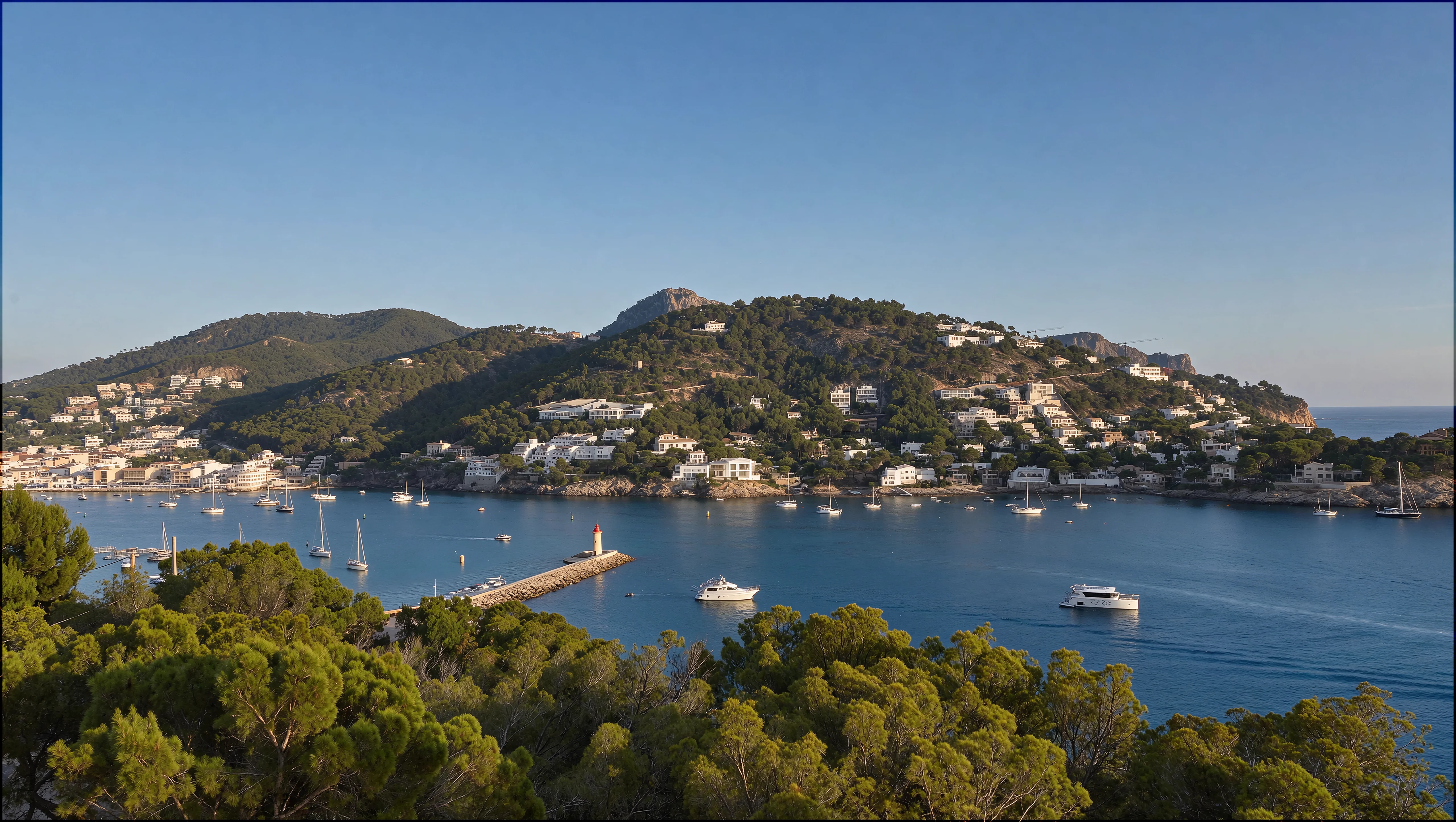
The coast around Port d’Andratx rewards a little discrimination. A rocky shoreline, a small cove and a sandy beach can all make a good day, but they are not interchangeable. Choose according to the people travelling with you, the conditions on the day and what you actually want to do once you arrive.
Begin with the kind of day you want
Before choosing a name on a map, ask a few ordinary questions. Does someone want to build sandcastles? Is anyone uncomfortable on uneven ground? Will the group be content looking at the sea if swimming is unsuitable? Answers like these are more useful than a photograph taken on a windless day. A coastal outing should work for the least confident person taking part, particularly when children or guests with limited mobility are involved. Check current access information rather than assuming every shoreline is straightforward.
Also decide how much of the day you want to spend away from Tres Terrazas. A short outing followed by lunch at the house can be more satisfying than carrying supplies for an entire day. The kitchen makes it possible to prepare something before leaving, while the three terraces offer different places to regroup afterwards. There is no need to visit every nearby cove during one stay. Repeating a place in better conditions may be the more rewarding choice.
Cala Llamp: come for a rocky coast
Cala Llamp should be understood first as a rocky coast, not a sandy beach. That distinction changes what to bring and what to expect. Shoes suitable for the approach and uneven surfaces may matter more than a large beach bag. Do not assume that an attractive place to look at the water also offers an easy entry into it. On arrival, assess the shoreline carefully, including the way back out, before anyone decides to swim.
For some groups, the appeal is simply the character of the coast: stone, open water and a different perspective on the bay area. Give that kind of visit its own value rather than treating it as an unsuccessful beach day. Keep belongings away from waves and leave room to retreat from exposed edges. If conditions are uncomfortable, leave without negotiating with the forecast. An alternative afternoon at the house is a sensible plan, not a failure to make the most of Mallorca.
Cala Fornells: think small
Cala Fornells is a small cove, which makes scale an important part of planning. A compact place can feel very different when many people arrive with bags, towels and competing ideas about where to settle. Bring only what you need and be considerate about the space your group occupies. If twelve people are travelling together, it may be more comfortable to visit in smaller groups or choose a different place according to the day’s circumstances.
Check the immediate conditions rather than relying on the general weather forecast for the island. Wind, waves and the shoreline underfoot can determine whether a visit is comfortable. Keep an eye on children throughout, including when adults are unpacking or preparing to leave. A small cove does not remove the need for water awareness. If the setting is better suited to a brief look than a long stay that day, let it remain a brief look and continue without disappointment.
Camp de Mar: when sand matters
Camp de Mar offers a sandy beach, making it a different proposition from Cala Llamp. If sand is central to the day you have promised the children, begin with the place that actually provides it. Even then, avoid making advance guarantees about swimming, space or the comfort of the sea. Check current local information and look at conditions when you arrive. A sandy shoreline is a description of the setting, not a promise that every visitor can enter the water safely.
For a mixed-age group, agree on a simple arrangement before everyone spreads out: where belongings will stay, which adults are supervising children and when to reassess the day. Take water, protection from the sun and a way to carry rubbish away. Keep the plan proportionate to the energy available. Leaving while everyone is still comfortable often produces a better memory than extending the visit through tiredness, especially when an easy evening at Tres Terrazas is already available.
Return with the coast intact
Whichever place you choose, keep the practical footprint small. Use appropriate access, respect signs and restrictions, take away everything you brought and avoid disturbing wildlife. Do not feed animals to draw them closer for photographs. Watch where you put bags and feet, and do not assume an apparently empty corner is there for unrestricted use. The most useful local information is often specific to that day, so ask about conditions without expecting anyone to guarantee the sea.
Back at Tres Terrazas, a coastal outing need not lead into another commitment. With six en-suite suites for up to twelve guests, the house allows a shared return without everyone needing the same next activity. Some may prefer the living room, others the pergola on Media or an evening beside Baja’s ten-metre saltwater pool. Use the day’s experience to choose the next outing more thoughtfully. The aim is not to rank the coves, but to find the right coast for your group.